Burnout does not start when performance falls apart.
There is a version of burnout that does not look like burnout; you are still performing, meeting deadlines, carrying responsibility, solving problems and being relied upon.
From the outside, very little appears to be wrong. Privately, you know something has changed.
You are more tired than you used to be; recovery takes longer and things that once felt relatively easy require more effort. Beneath competence and coping, you know that the way you are functioning is becoming unsustainable.
Still, you keep going.
I know this place particularly well because I have been there myself.
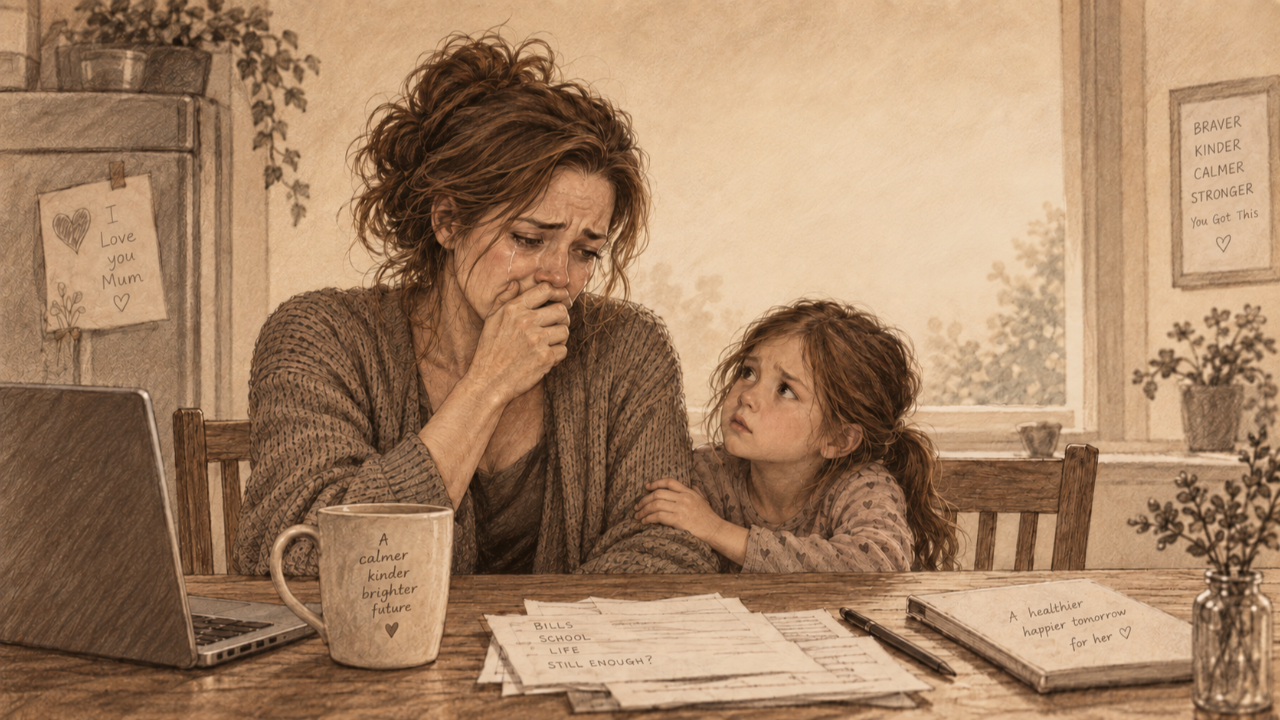
Many years ago, I was a single mom working in a high-pressure corporate environment. I was ambitious about my career and equally determined to give my daughter a certain lifestyle.
I believed I could do it all, so I did.
I worked, parented, carried responsibility, pursued ambitious career goals and kept going long after I was tired.
What I did not recognise at the time was that I also had an invisible agreement with myself about stopping.
I was allowed to stop only when I genuinely could not continue.
My body would eventually provide me with a ‘legitimate’ reason to stop; I went through recurring cycles of becoming very ill, often with lung infections. Only then would I stop. Illness removed the expectation that I should continue and gave me permission to rest and receive care because, by that point, nobody could reasonably expect me to keep going.
Eventually, facing burnout, I reached what seemed like the obvious conclusion.
The job was the problem.
There are times when the job really is part of the problem. Poorly designed work, excessive demands, unhealthy cultures and chronic stress can absolutely create the conditions for burnout. Sometimes leaving is exactly the decision you need to make.
I believed it was, so I left.
I became an entrepreneur and suddenly had what I thought I needed: freedom over my own time.
I was sure that a completely different working environment, being my own boss and with no external pressure, would give me the peace of mind I needed.
Except that, in a surprisingly short time, I began recreating a remarkably familiar experience.
I was working too much again. I was pushing through tiredness again. I was continuing long after I knew I needed to stop.
Eventually, I decided that perhaps the problem was the pace of the city. I thought moving to a small coastal village would create the different life I needed.
With different surroundings and a different pace of life, my work life would feel less pressurised.
Unsurprisingly, given enough time, I recreated the same cycle again.
At some point, I had to look at the one thing that was the common denominator in every version of the story.
Me.
It was not so much that a changing environments was wrong; I benefited enormously from each new environment. It was that the environment was not the primary driver of the burnout cycles, so it could not be the fix. What kept happening inside me in those environments held the key.
What made continuing feel compulsory?
What made rest require permission?
And what kept taking me to the point where my body had to force me to stop before I believed I was entitled to receive care?
That was the piece I had been missing.
Today I describe this as an identity agreement: the internal prediction made by your brain about who you need to be in order to be safe, loved, valued, accepted or okay.
Mine contained a very powerful instruction:
Keep going. Stopping, according to my brain's prediction, was too risky; my self-worth depended on being the hard worker, the ever capable one. What would stopping say about me?
Rest was permitted when continuing was no longer possible. Care was permitted when I had sufficient evidence that I genuinely could not cope.
Once I understood that, something else about burnout became much clearer.
Two people can work under similar pressure, carry similar responsibility and face similar levels of stress, yet one burns out while the other does not.
Equally, two people can both arrive at burnout through completely different internal agreements.
Someone else may not have my agreement at all. Their agreement might be:
I am valuable when I am the person everybody can depend on.
For that person, saying no can feel like betrayal. Delegating can create guilt. Rest can feel irresponsible.
The exhaustion may look very similar from the outside.
The work of recovery and prevention is different.
This is the part of the burnout conversation I believe we are missing.
We have become much better at recognising that workplaces can create unhealthy conditions. What outside-in advice cannot always explain is what kept you in those conditions for so long, what made certain demands feel impossible to refuse, or how you can leave one environment only to gradually create a remarkably similar experience somewhere else.
Changing the outside may be necessary.
It may not be enough if the identity agreement does not change with you.
If you are still performing while silently knowing that the cost is becoming too high, you may already know what somebody would tell you to do.
Work less. Delegate. Protect your time. Rest. Say no.
Knowing is often not the problem.
The more useful question is: What keeps overriding what you already know?
What makes this way of functioning feel necessary?
What part of your identity would feel threatened if you stopped doing it this way?
This is why I am teaching the masterclass on 16 September.
We miss something important when we focus only on correcting the behaviour we can see, without examining what drives it.
The masterclass is called:
You keep saying, “This is who I am.”
What if that is the very thing keeping you stuck?
We will look at how identity agreements influence the choices you make, the responsibilities you carry and the repetitive cycles that continue even when you consciously want something different.
You will identify one recurring cycle in your own life, understand the identity agreement that may be driving it and leave with a practical place to begin changing it.
You do not need to wait until your body forces you to stop.
If you are still performing, still delivering and still holding everything together while secretly knowing that the current way of functioning has become too costly, I would especially love to have you on the call.
Register for the live masterclass on 16 September:
Much love,

P.S. If you know someone who is not coping, even though they say they are, please forward this newsletter to them. It may be exactly what they need today.



Responses